1.What is an inflatable bouncer? What are the characteristics of its appearance and structure?
1.1 Definition of an inflatable bouncer.
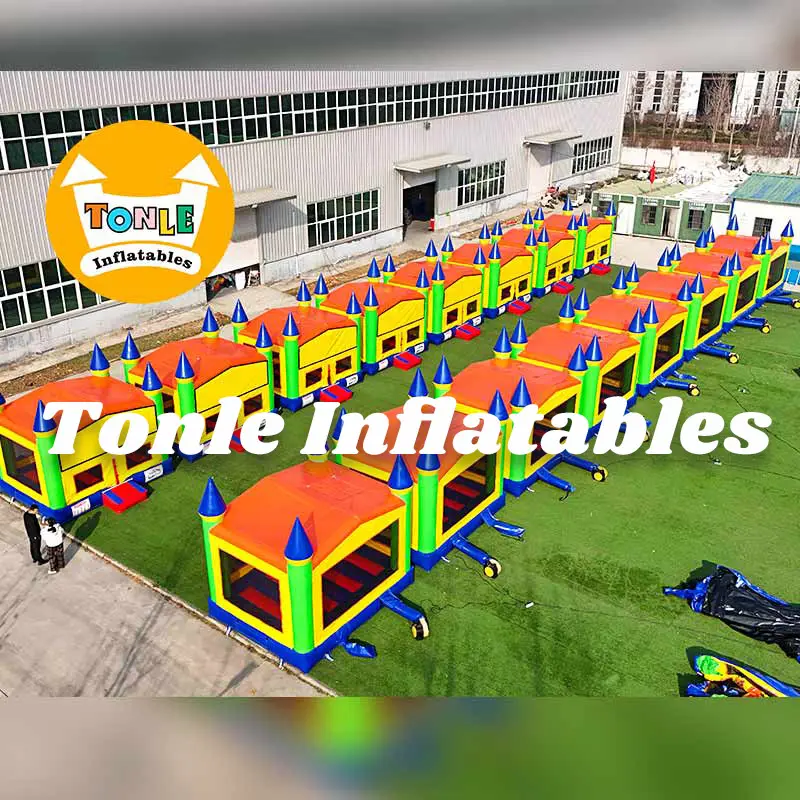
Simply put, it is a large, inflatable amusement structure made from PVC-coated mesh fabric. It is kept inflated by a continuous supply of air from a blower, ensuring it remains firm and bouncy. These are common children’s attractions found in shopping malls, parks, at parties, and at tourist destinations.
They are entirely different from the small, spring-based trampolines often used by children at home. Inflatable bouncers are soft, air-filled structures that can be built on a very large scale. Once finished with, they can be deflated and folded up, making them easy to transport to different locations—which is why they are frequently referred to as "inflatable castles" or "bouncy castle playgrounds."
1.2 What are the core components of an inflatable bouncer?
1.2.1 The main fabric (PVC-coated mesh/tarpaulin) serves as the "shell" of the inflatable product and is the key factor in determining its durability.
1.2.2 The air blower. Its power output is matched to the size of the product; it provides a continuous supply of air to keep the unit fully inflated.
1.2.3 Included accessories. These consist of ground stakes and anchor ropes (used to secure the unit to the ground and prevent it from being blown over), a repair kit, and a storage bag—no need for separate purchases.
1.3 How do inflatable bouncers work? What is the underlying principle?
1.3.1 Inflatable products are connected to a dedicated air blower. Once switched on, the blower provides a continuous supply of air, keeping the product fully inflated and firm.
1.3.2 The fabric is not 100% airtight; minor air leakage occurs at the seams and joints (this is not a quality defect, as it is impossible to make stitched seams completely airtight). Therefore, the blower must remain on—continuously pumping air in while allowing a small amount to escape—to maintain a balance that keeps the product inflated.
1.3.3 When not in use, the blower can be turned off, allowing the air to gradually escape. The product can then be folded into a compact bundle, making it easy to transport and store.
1.4 What is the difference between residential-use and commercial-rental models?
1.4.1 Residential-use models: These are thin, lightweight, and inexpensive. They are intended only for occasional use by one’s own children—typically 1–2 hours a day—and may wear out or break within a few months. They are not suitable for commercial rental purposes.
1.4.2 Commercial-rental models: These feature thicker fabric, robust construction, and built-in safety protections. Designed for frequent, repeated setup and use, they can withstand high-intensity activity and multiple children playing at once; they are the standard choice for the rental business.
You can find us here:
Facebook: https://www.facebook.com/tonleinflatables/
Instagram: https://www.instagram.com/tonle_inflatables/